Last updated November 23, 2026
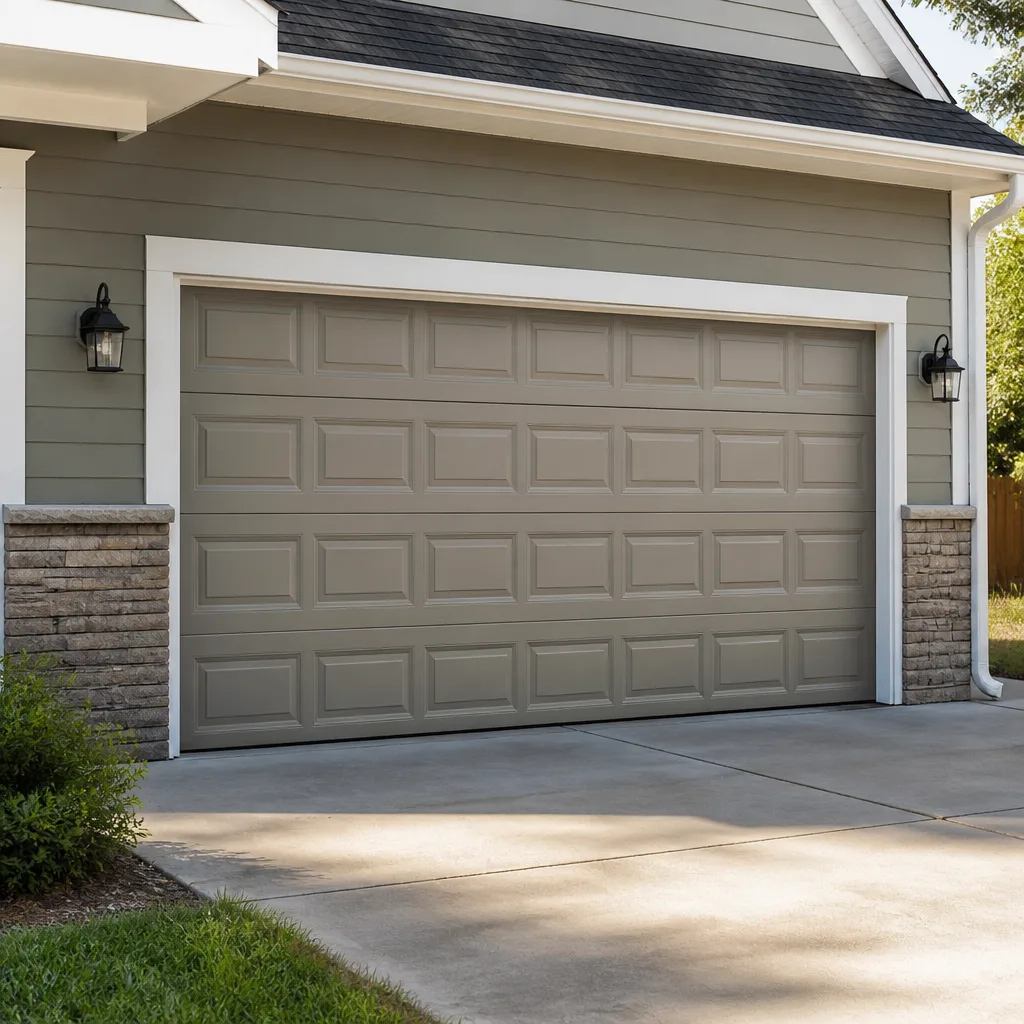 Raised-panel steel
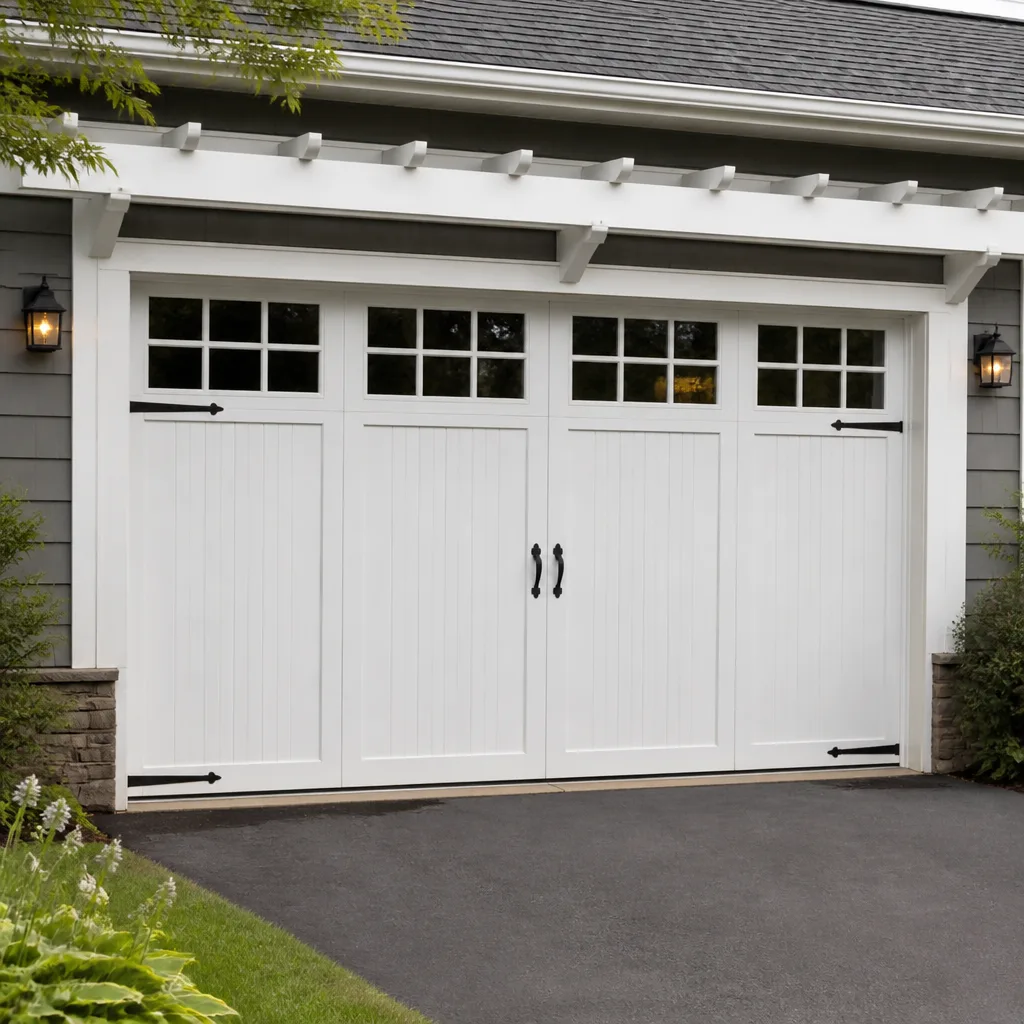 Carriage house
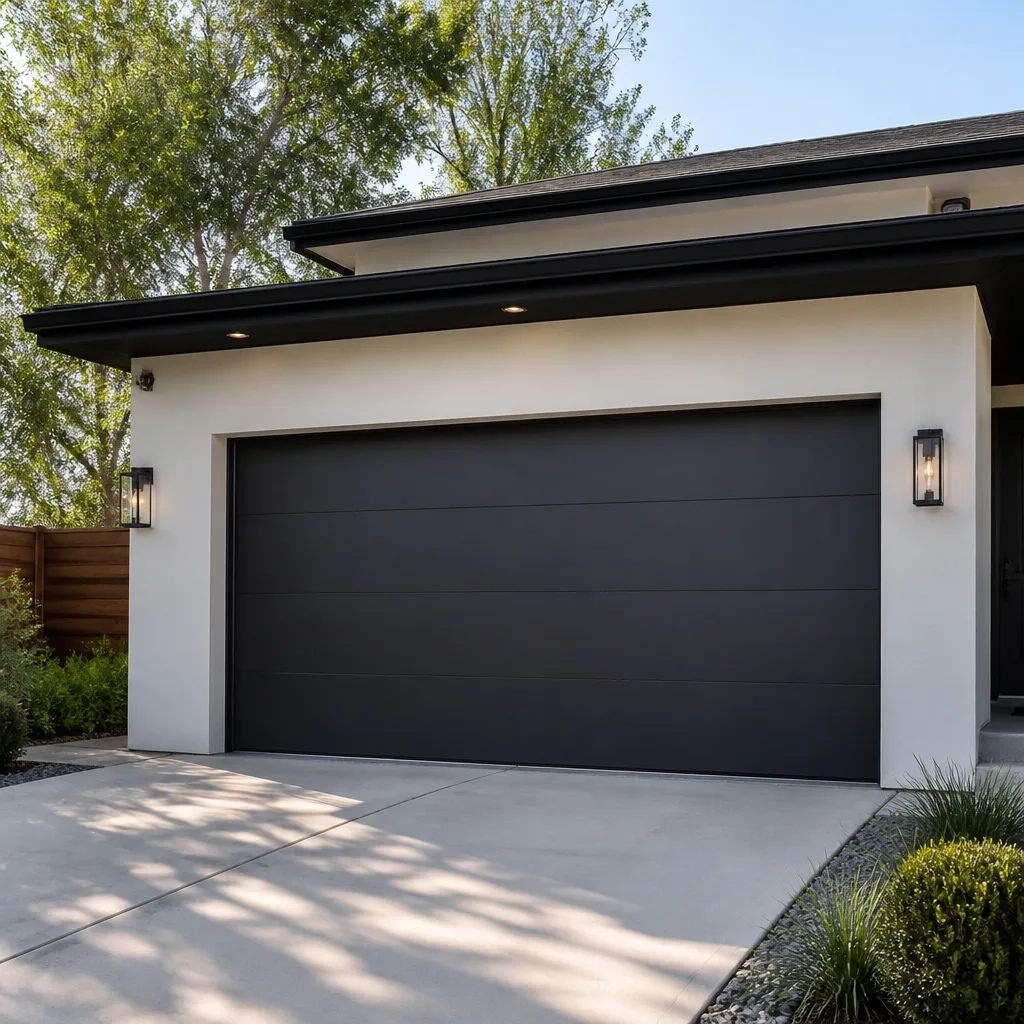 Modern flush
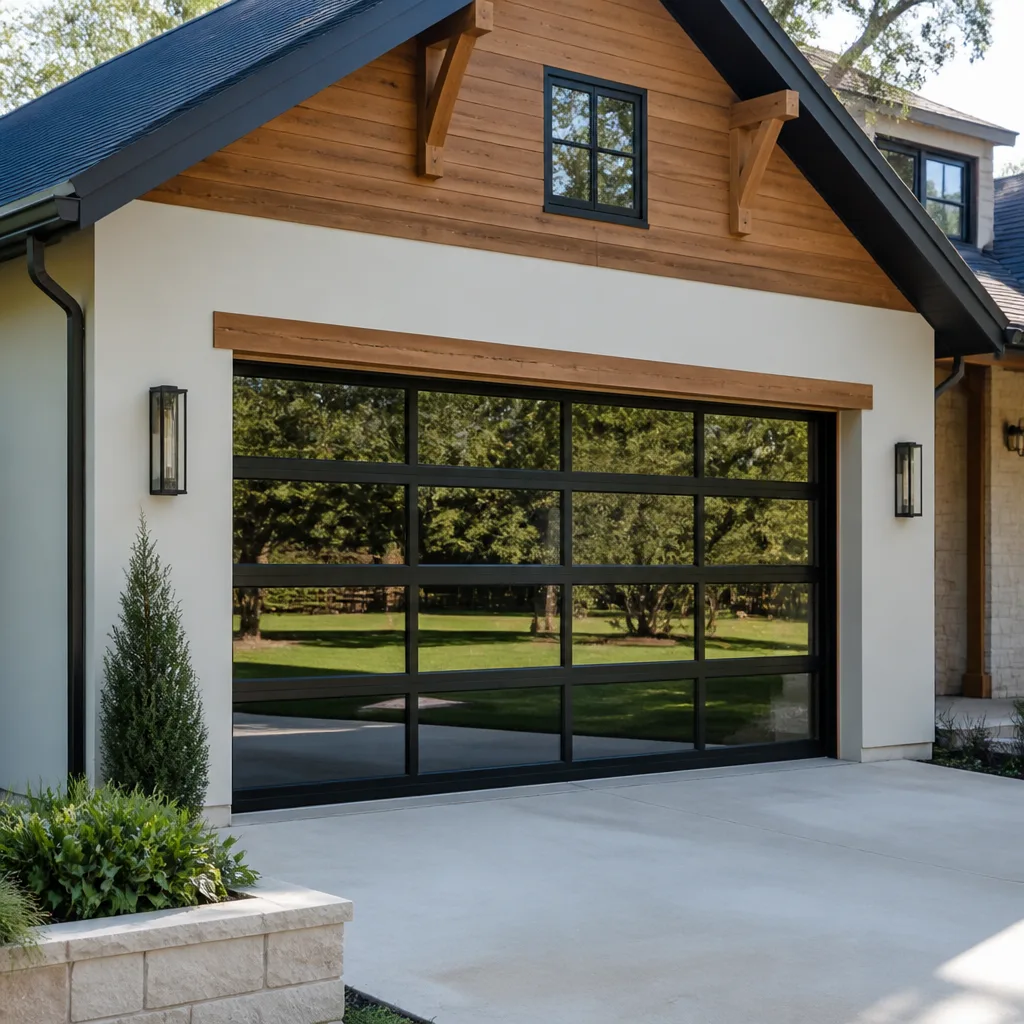 Full-view glass
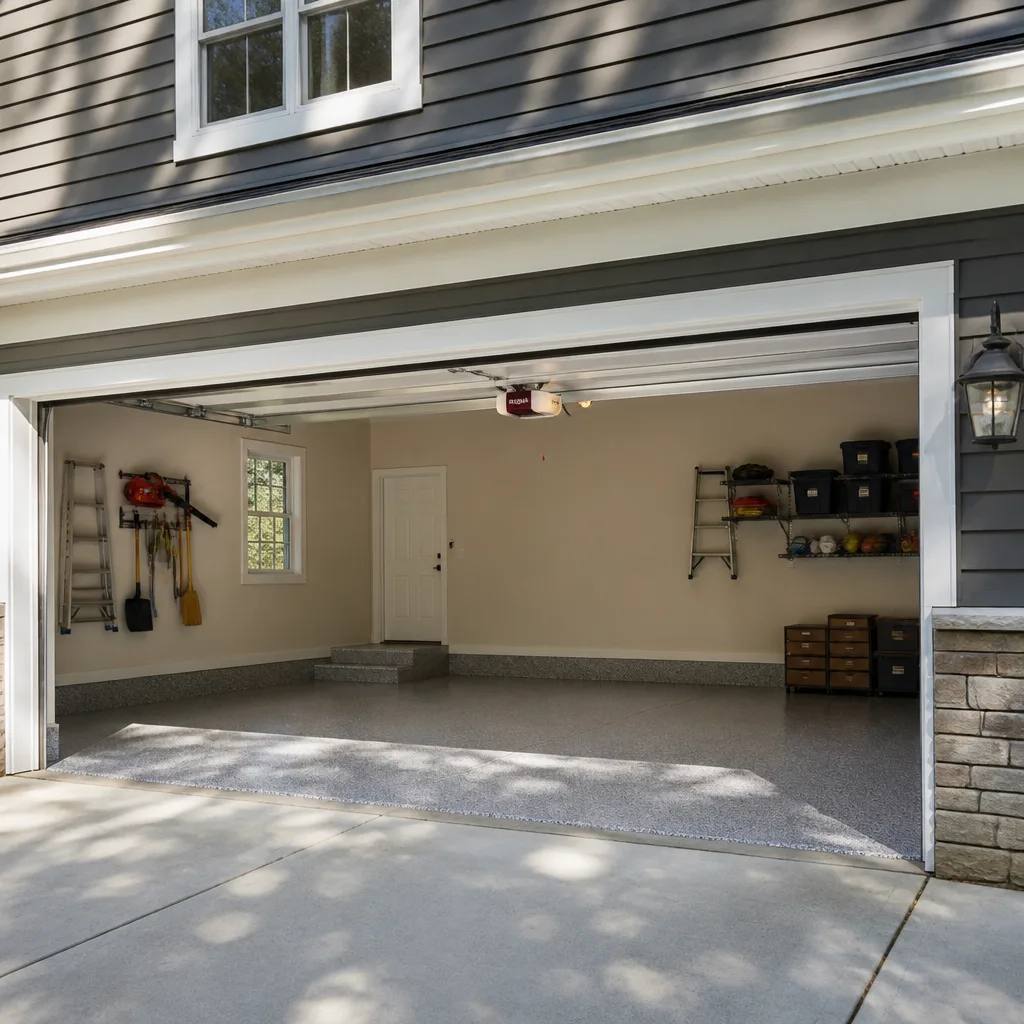 LiftMaster openers
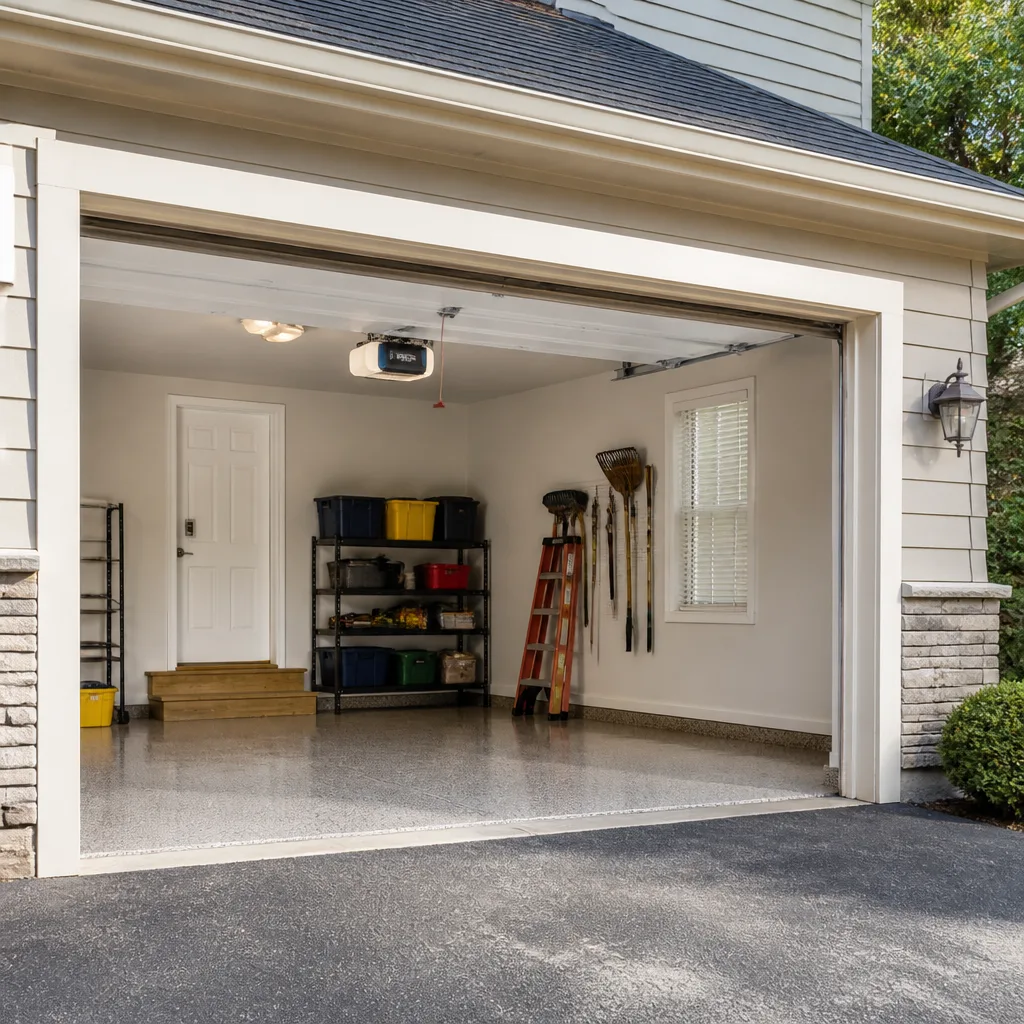 Chamberlain openers
Full 25-point door and opener safety check with every visit - springs, cables, rollers, tracks, and your LiftMaster or Chamberlain opener included
You get a price before we start. It does not change when the pro arrives.
Get your free estimateSeasonal Garage Door Care for Woodbridge Township: Year-Round Homeowner’s Guide
Most homeowners in Woodbridge Township treat garage door care as a once-a-year chore, usually a squirt of lubricant on the hinges and a vague glance at the rollers. That habit misses the two weeks each year that actually matter. The stretch between December’s first hard freeze and January’s deep cold is when bottom seals crack, grease in the opener’s gearbox hardens to putty, and motors quietly start laboring against hardware that fought them all summer. By the time the door shudders on its way up, the damage has been building for months. This guide maps the mechanical and weatherproofing work to the way a Woodbridge Township calendar year actually behaves, from the humid July afternoons when composite panels absorb moisture to the nor’easters that test every fastener and track bracket between the Arthur Kill and the inland neighborhoods. You’ll get the tasks, the timing, and the products that hold up in this specific climate.
Quick Answer
Seasonal garage door care in Woodbridge Township comes down to four checkpoints: a fall tune-up before first frost, a freeze-thaw inspection in late January, a summer humidity and storm-readiness review in July, and a spring hardware check once the ground stabilizes. The single highest-value window is the six weeks before first frost, when lubrication, weather-seal replacement and opener adjustment yield the most protection for the fewest dollars. Every task below fits one of those four checkpoints, so you can pace the work across the year instead of panicking when something snaps.
Styles & brands we work with
- Raised-panel steel
- Carriage house
- Modern flush
- Full-view glass
- LiftMaster openers
- Chamberlain openers
Table of Contents
- Why Woodbridge Township Is Hard on Garage Doors
- The Fall Readiness Window: Your Six-Week Head Start
- Freeze-Thaw Cycles and the Threshold Gap
- Summer Humidity: The Hidden Threat to Wood Composite Panels
- The Lubricants That Survive a Woodbridge Township Temperature Swing
- Pre-Storm Checklist for Hurricane Season and Nor’easters
- Opener Care Through the Seasons
- Spring Hardware Inspection: What to Check and What to Leave Alone
- Common Mistakes to Avoid
- When to Call a Professional
- Frequently Asked Questions
- The Bottom Line
Why Woodbridge Township Is Hard on Garage Doors
Woodbridge Township sits in a mid-Atlantic climate band where a single calendar year delivers genuine extremes. January mornings can fall below 20°F, while August afternoons regularly climb past 95°F. That’s a swing of well over 70 degrees, and every component of a garage door system expands, contracts and flexes across it. Steel tracks move fractionally. Wood and composite panels take on and release moisture. Lubricants thin out in the heat and thicken in the cold. The door doesn’t fail from one big event. It fails from hundreds of small cycles that nobody adjusted for.
Add the geography. The Arthur Kill and the tidal waterways along Woodbridge Township’s eastern edge drive humidity higher than inland New Jersey, especially through the summer. Neighborhoods closer to the water – Port Reading, Sewaren, Woodbridge Proper – see more sustained moisture in the air than Avenel or Iselin a few miles inland. That difference matters for wood panels and metal hardware alike. Humidity drives swelling and corrosion on a slower clock than cold, but its effects compound over years if seals and gaskets aren’t maintained. Winter and summer are both working against your door at the same time, just in different ways.
Woodbridge Township’s housing stock adds another layer. The township went from a collection of separate communities to the version you know today through several waves of post-war development, and each wave used the garage door materials and hardware popular in its era. A 1960s colonial in Colonia likely still has wooden panels with hinges and rollers that were never designed for a century of service. A newer build in the Iselin or Avenel corridor may have an insulated steel door running on a belt-drive opener from Chamberlain or Genie. The seasonal maintenance schedule for each is different. Neither is optional.
The Fall Readiness Window: Your Six-Week Head Start
The six weeks before the first hard frost – typically mid-October through Thanksgiving in Woodbridge Township – is the highest-value maintenance window of the year. Every hour and dollar spent in that stretch prevents work that would otherwise be forced on you in January, when the ground is hard, the parts are slower to arrive, and the cold makes every repair more urgent. If you do one thing for your door this year, make it a proper fall service. If you do two, make the second a spring check.
Here’s what the fall window should cover:
- Lubricate every moving surface with a cold-rated product. Hinges, bearings, the torsion spring coils (lightly, and only on the coil, never the shaft), the roller stems, the opener’s carriage and chain or belt. Use a synthetic grease or a lithium complex grease rated for low temperature. The general-purpose oil you used in July won’t hold.
- Inspect and replace the bottom weather seal. The rubber astragal along the bottom edge is the door’s first defense against cold air, snowmelt and wind-driven rain. If it’s cracked, brittle or compressed flat, replace it before the first freeze.
- Test the door’s balance by hand. Disconnect the opener (pull the release, usually a red cord), lift the door to halfway, and let go. A properly balanced door stays put. One that drifts down has a spring under tension – which is normal adjustment territory, and a job for a professional.
- Check the opener’s force settings and safety reverse. Place a 2×4 flat on the floor under the door path and close the door. It should reverse on contact. The photo-eye sensors should stop the door when blocked. If either fails, the opener needs adjustment now.
- Tighten every hinge, bracket and track fastener. Steel contracts in the cold, and hardware that was snug in August will rattle loose by December. A socket wrench and ten minutes prevents the track misalignment that causes doors to bind.
- Clear the tracks and inspect the trim. Vacuum debris from the vertical tracks, wipe them down with a dry cloth, and check the wood trim and sealant around the door frame for gaps or cracks that will let cold air in.
If you’d rather not tackle the balance test or the opener adjustment yourself, that’s reasonable. A seasonal service call in the fall costs far less than the emergency repair that skipping it tends to invite. Scheduling a garage door repair visit in October is also the easiest way to catch small problems while the weather is still forgiving.
Freeze-Thaw Cycles and the Threshold Gap
The first thing to understand about freeze-thaw is that it moves the ground under your garage. Woodbridge Township’s driveway aprons and the concrete slab at the garage threshold go through dozens of freeze-thaw cycles each winter. Water collects in the joint between the driveway and the slab, freezes overnight, expands, and lifts the slab a fraction of an inch. Then it thaws and settles back – usually not to quite the same height. Repeat this through December, January and February, and the threshold gap at the bottom of your garage door changes shape season to season.
That matters because the bottom seal is only as good as the surface it presses against. A seal designed for a flat concrete threshold can’t do its job when the slab has tilted or heaved. The result: a visible gap at one corner, cold air pouring in, snowmelt tracking across the floor, and eventually water reaching the bottom panel of the door where it starts the paint-and-wood problem that’s expensive to fix. The same mechanism works on asphalt driveways, which are more flexible than concrete and can settle more dramatically.
What to do about it:
- Look for the gap in late January, not in October. The ground has been through several freeze-thaw cycles by then, and the worst settling has already happened.
- Check the seal from the inside, at night, with a light on outside. Any visible light at the bottom is a gap.
- Use a threshold seal designed for uneven surfaces if your slab has tilted. These sit on the floor rather than hanging on the door and add a compressible barrier across the whole width.
- Don’t try to fix slab heaving yourself. Mudjacking or slab repair is a concrete contractor’s work, not a garage door technician’s. If the slab has moved more than a small amount, the fix belongs to the concrete trade.
If the threshold has settled enough to visibly gap, the door’s balance and travel may also need adjustment, since the door was set to close against a different surface. This is one of the most common winter calls we get in Woodbridge Township, and it’s an easy fix when caught early.
Summer Humidity: The Hidden Threat to Wood Composite Panels
Here’s the part most guides get wrong. Winter is the season that stresses hardware, but summer is the season that damages wood and the composite panels posing as wood. Woodbridge Township’s mid-Atlantic humidity, amplified near the Arthur Kill, keeps the air loaded with moisture from June through September. A wood or wood-composite garage door that hasn’t been sealed correctly will absorb that moisture through the panel edges and the bottom rail. The panel swells. The paint film begins to check. By the following spring, you have soft spots, a panel that no longer sits flush, and a coating that’s lifting in sheets.
What to look for in July:
- Panel edges that feel soft or spongy. Press the bottom rail and side edges with your thumbnail. If it sinks in, moisture has compromised the material.
- Paint that’s bubbling or flaking near the bottom of the door. This is the classic sign of moisture pushing up from inside the panel.
- A door that has visibly warped or taken on a bow. Swelled panels push against each other and against the frame. That stress shows up as a shimmy or a rub that wasn’t there in the spring.
- Visible gaps between panels that close up in dry weather. The panel joints breathe; a joint that only opens in August tells you moisture is moving through the material.
The fix is straight maintenance: a properly sealed paint or stain on the exterior face and especially on the bottom edges, plus a bottom weather seal that keeps splash-back from reaching the panel. Steel doors from Clopay or Amarr don’t face this moisture problem, but their paint finishes still take sun damage and their bottom brackets still need inspection. If your wood or composite door is showing soft edges in July, this is where a Woodbridge Garage Door Repair Co inspection catches the problem in the repairable stage rather than the replacement stage.
The Lubricants That Survive a Woodbridge Township Temperature Swing
The wrong lubricant is worse than no lubricant, because it collects grit and grinds it into the very surfaces it was supposed to protect. In a Woodbridge Township climate, your lubricant has to hold viscosity in sub-20°F January mornings and stay in place at 95°F in August without pooling off the hinge and dripping onto the floor. That’s a real engineering requirement, not a marketing one, and it narrows the field to a handful of products.
What works:
- Synthetic lithium complex grease for hinges, rollers and bearings. Rated for broad temperature ranges and stable across years, not months. Apply with a small brush or a grease gun, not an aerosol spray.
- White lithium grease for the opener’s chain or the torsion spring coils. In aerosol or tube form, easy to apply sparingly, and tolerant of both heat and cold.
- Silicone spray for the bottom seal and the weatherstripping around the door frame. Not for metal-on-metal surfaces; silicone is for rubber and vinyl only.
What doesn’t work:
- WD-40 or lightweight penetrating oil on hinges and rollers. These are solvents, not lubricants. They evaporate in days, strip existing grease, and leave the metal dry and unprotected.
- General-purpose motor oil. Too thin at warm temperatures, too thick in the cold. It collects grit and migrates off the hinges.
- Nylon or plastic-specific sprays on the torsion spring. The spring is steel under heavy tension and needs grease, not plastic-safe spray.
- Any aerosol the manufacturer doesn’t specify for garage door hardware. The wrong propellant can attack the seal material.
Treat lubricant as a season-specific decision, not a one-size purchase. Buy the cold-rated grease in the fall and store it so you can reapply it in January when the door starts stiffening up. If you schedule a fall service, the technician will typically bring the right products, but the small touch-up you do in mid-winter keeps the door smooth until spring.
Pre-Storm Checklist for Hurricane Season and Nor’easters
Woodbridge Township’s position inland from Raritan Bay doesn’t protect it from wind. Hurricane season runs from June through the end of November, and nor’easters can hit at any time in the colder months, driving sustained wind and rain against every exposed garage door in the area. Neighborhoods close to the Arthur Kill and the tidal waterways – Port Reading and Sewaren in particular – see the strongest gusts, but wind damage isn’t exclusive to the waterfront. A door panel blown off its hinges on a property in Avenel or Fords can cause both property damage and injury.
The pre-storm checklist should be short enough that you’ll actually run through it. Here’s ours:
- Test the door’s full balance and alignment. A door that’s slightly off-track will be pushed further off by wind pressure. If it wobbles in calm weather, it’s a liability in a storm.
- Check every hinge and track bracket for tightness. Loose hardware is the first thing wind exploits. Tighten everything you can reach with a socket set.
- Inspect the bottom seal and side weatherstripping. Wind-driven rain finds gaps you didn’t know about. Replace any seal that’s cracked or separated.
- Close and lock the door before the storm arrives. A closed door with the opener engaged is far more resistant to wind pressure than one left open by even a few inches.
- If your area floods, raise anything stored on the garage floor. Water intrusion at the threshold is common in low-lying areas during heavy rain, and the door bottom is the least-protected part of the structure.
- Know what to do if the door won’t close fully during a storm warning. Call our emergency line; a door that won’t close is a safety and security issue that we can help you address quickly.
If you’re in a coastal Woodbridge Township neighborhood and your door is older, the pre-storm check is worth having a professional perform at least once, especially if you’re not sure how the door was originally anchored. It’s a quick visit, and it tells you what you’re dealing with before the wind does.
Opener Care Through the Seasons
An opener is the component that quietly absorbs every dollar of seasonal wear. In January, the grease in the gear case thickens. The motor draws more current to move the same door at the same speed. The logic board, which was built for normal operating conditions, runs slightly warmer. Do this for three months and you start hearing the telltale symptoms: the door lurches at the start of travel, the opener clicks a few times before engaging, or the motor sounds strained. In August, the same opener runs in the opposite extreme – belt or chain expands slightly, limit settings drift, and a door that worked all winter suddenly stops a few inches off the floor.
What to check, season by season:
- Fall: Lubricate the chain or belt and the opener’s rail. Check the force settings against the manufacturer’s recommendations. Verify the safety reverse and photo-eye sensors. This is where the most preventive value sits.
- Winter: If the door sounds strained in the cold, don’t force it. The opener is usually protecting itself. A quick call to a specialist tells you whether the opener needs adjustment or the door’s torsion system has drifted.
- Spring: Recheck the safety reverse, clean the photo eyes thoroughly, and check the travel limits. The door may have settled against a changed threshold.
- Summer: Clean the opener housing and check the battery in the wall console or keyless entry. Humidity accelerates corrosion on the battery terminals.
We work on the brands already in your garage, which means garage door opener repair for a Chamberlain or Genie unit starts with a technician who knows the logic board behavior and the failure modes specific to those models. If the opener is more than a decade old and starting to need adjustments every season, a replacement may be more economical than repeated repairs. That’s a conversation worth having in the spring, not in the middle of a January cold snap.
Spring Hardware Inspection: What to Check and What to Leave Alone
Garage door torsion springs are under enough tension to cause serious injury if handled without the right tools and training. This is the one part of the door system where the correct advice for homeowners is not “check it yourself” but “know what you’re looking at and call a professional.” That said, you can and should inspect the spring system visually each season, because catching a problem early – a loose set screw, a spring that looks stretched, a cable with a stray strand – is what prevents an emergency repair.
What to look at, from a safe distance:
- The spring coils themselves. Look for visible gaps, rust spots, or a spring that looks like it’s already stretching apart. A torsion spring that has broken typically shows an obvious gap or a loose, hanging section.
- The safety cables. These run through the springs and keep them from flying if they fail. Check for rust, fraying, or a cable that’s slipping out of its bracket.
- The center bearing plate and end brackets. These are the anchored points. Look for looseness, rust, or a bracket that appears to be pulling away from the header.
- The drums and cables at each end of the shaft. Cables should be wound evenly and under tension, not loose or crossed.
What to leave alone: anything that requires a winding bar or a tool on the torsion system. Replacing a spring, adjusting a set screw on a loaded spring, or rewinding a cable after a spring failure are all jobs for a trained technician. In our experience, this is the call we get most often after a homeowner read a DIY article and then found themselves with a door that wouldn’t move and a spring that had let go. If your spring system is showing any of the signs above, call (877) 820-9179 and let a professional handle the repair. For the technical detail on how garage door spring repair is done and why it’s a specialist job, we’ve written about it in more depth.
See the difference
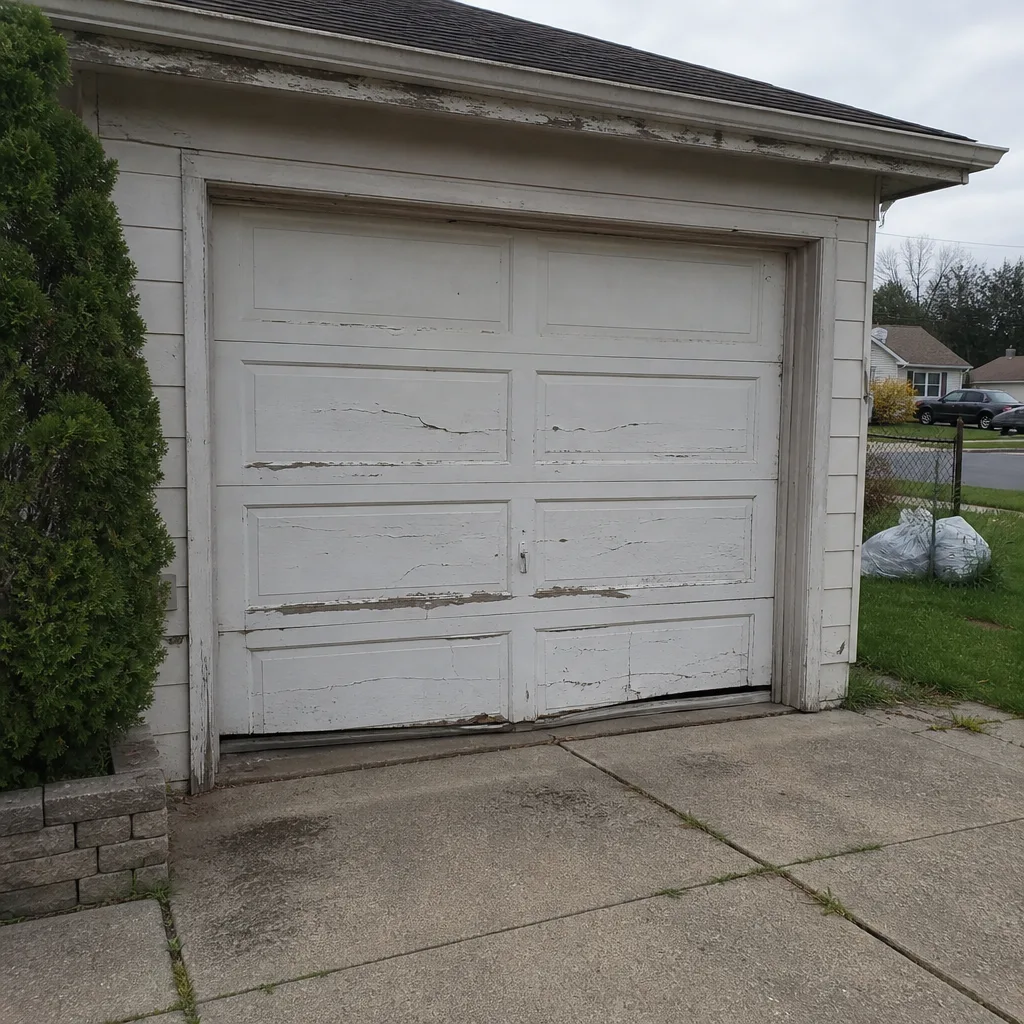 Before
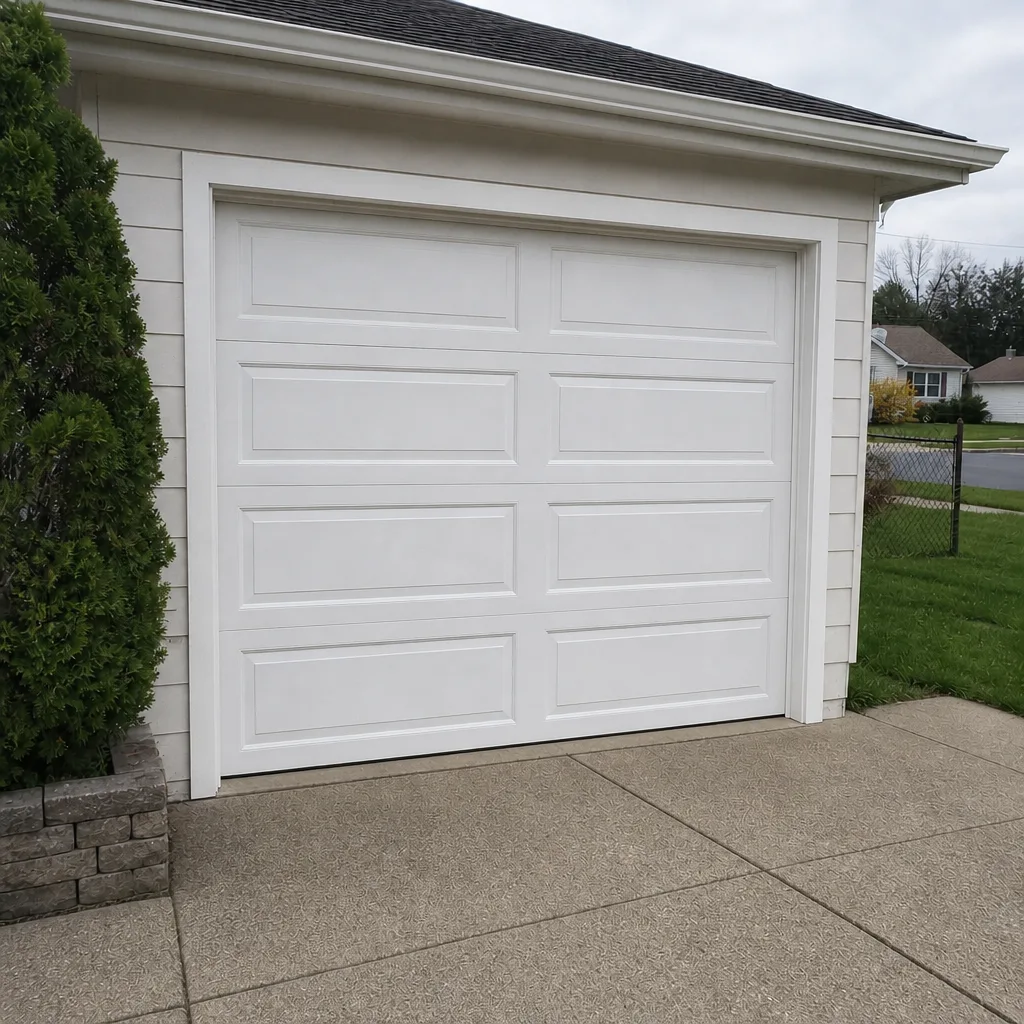 After
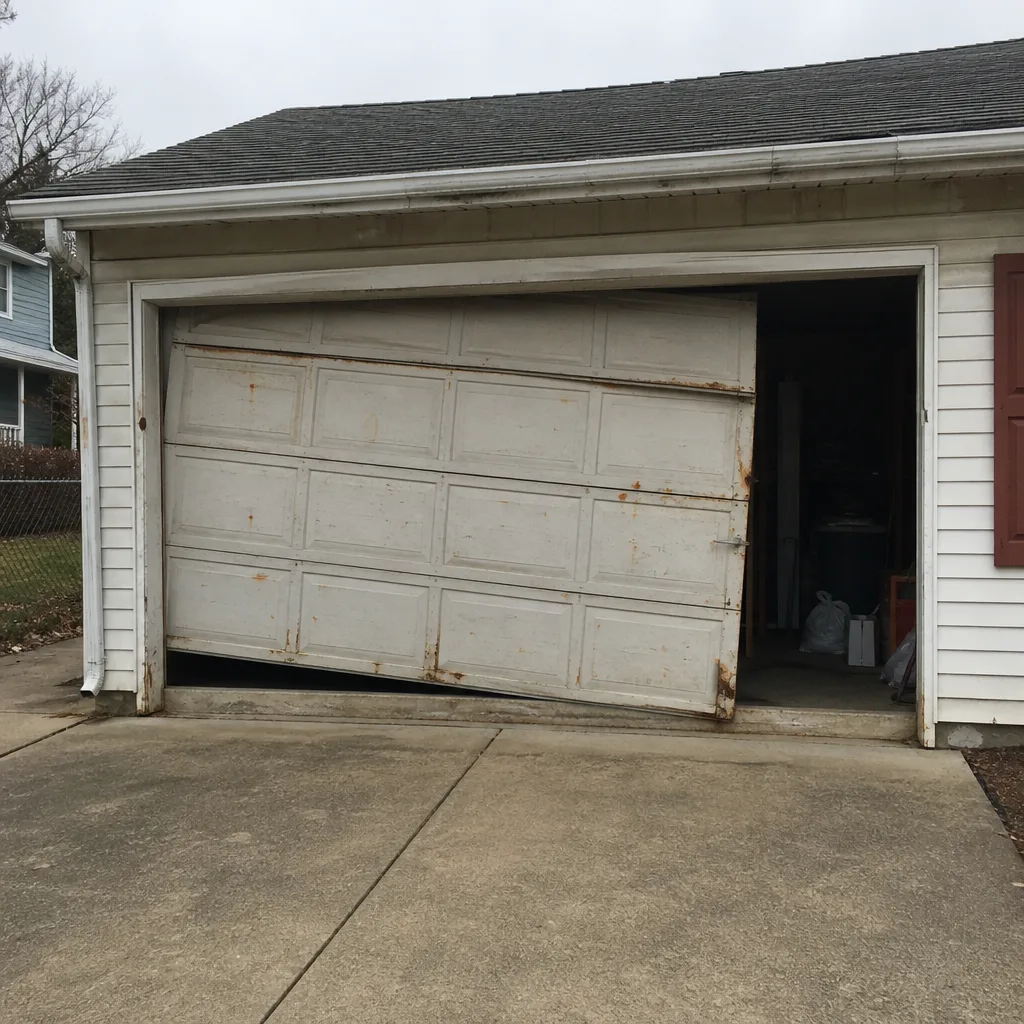 Before
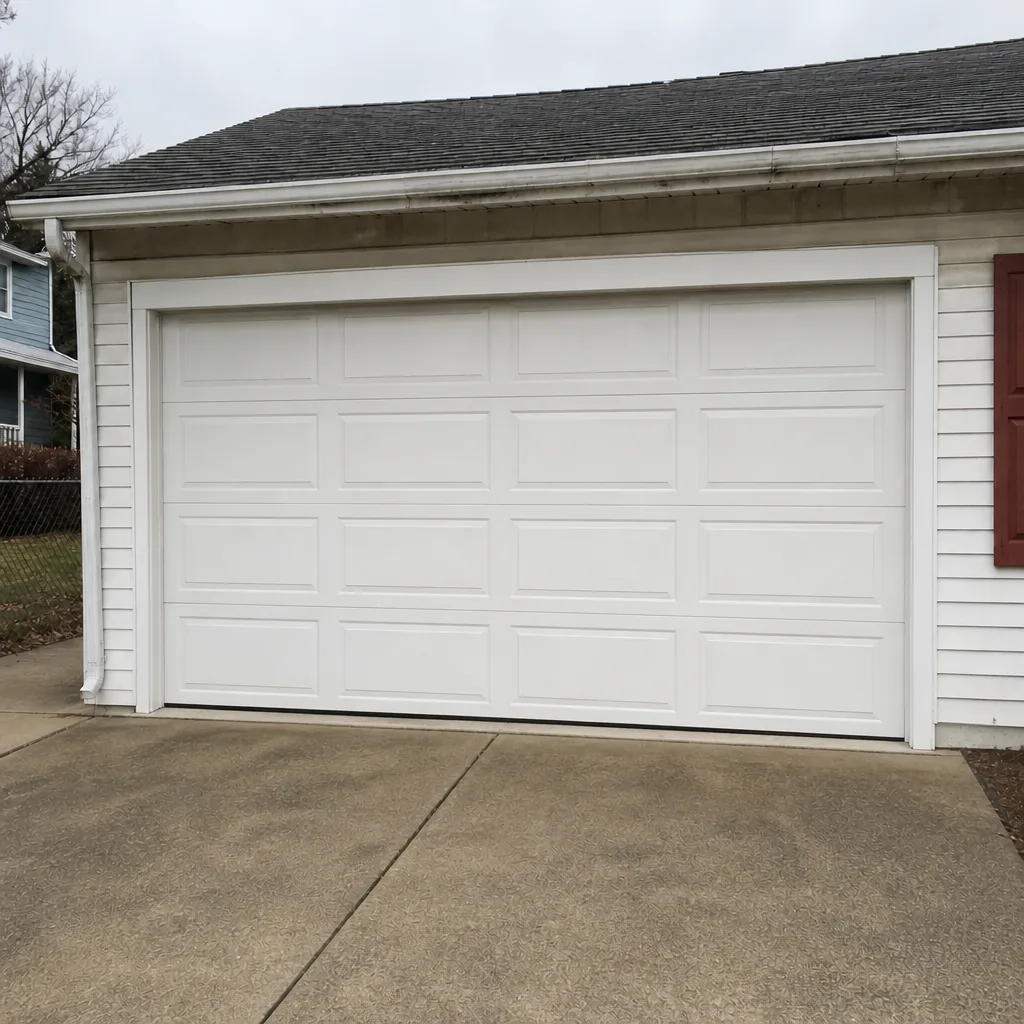 After
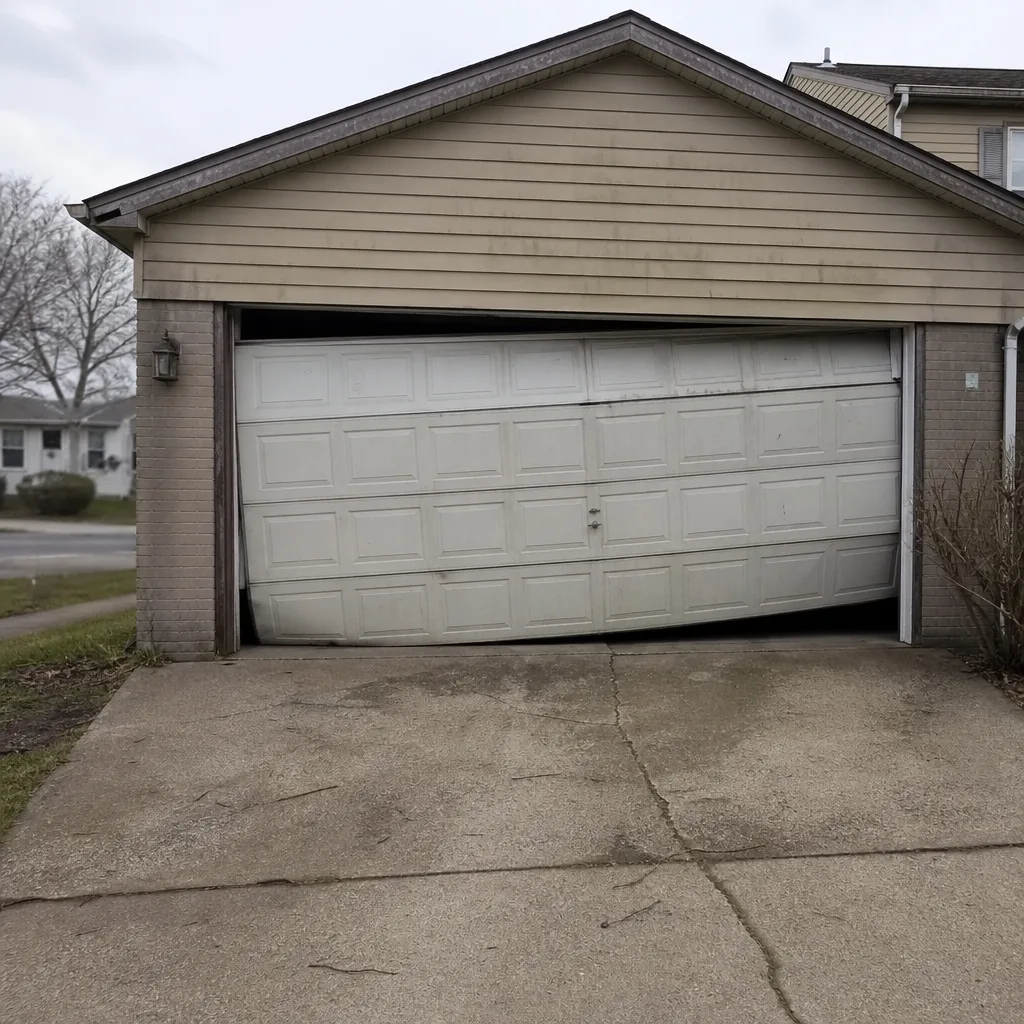 Before
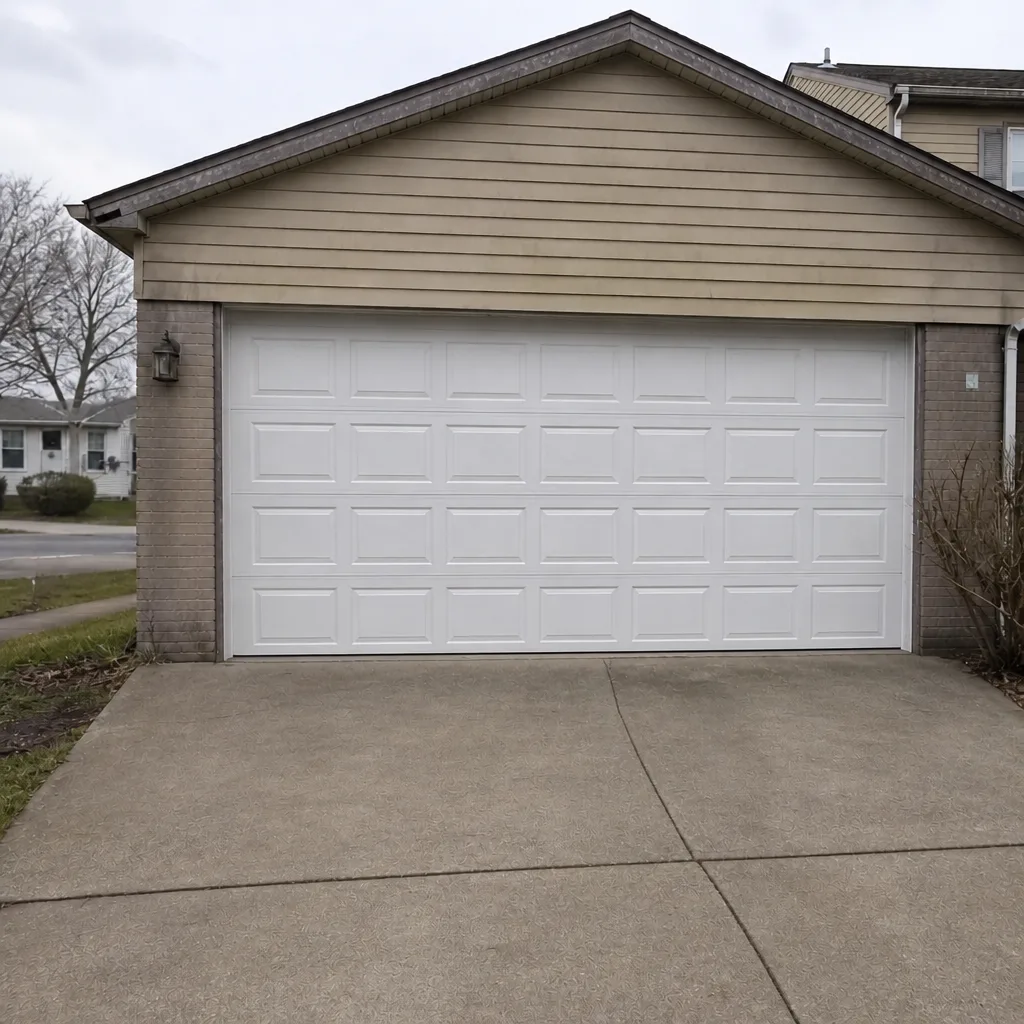 After
Common Mistakes to Avoid
- Lubricating the entire door once a year instead of twice. A single annual application doesn’t survive 12 months of Woodbridge Township temperature swings. Cold-rated grease applied in the fall needs a mid-winter touch-up, and the spring service in April needs the same attention.
- Skipping the bottom seal inspection because the door still closes. A door can close completely and still be leaking cold air and water through a bottom seal that has hardened. The seal compresses over time and stops making contact with the threshold. Check it in January, not October.
- Using WD-40 on hinges and rollers. It’s a solvent, not a lubricant. It strips the grease you need and evaporates within days. The door may seem smoother for a week, then it’s worse than before.
- Ignoring the summer humidity on wood panels. Winter damage gets all the attention, but July is when composite panels absorb the moisture that turns into soft spots by the following spring. A sealed paint film on the exterior face and, especially, the bottom edge is the only real protection.
- Trying to adjust the torsion spring yourself. This is the one mistake with a genuine injury risk. A garage door spring under tension is not a DIY job, no matter what a video suggests. Call us instead.
- Assuming a door that’s slightly harder to open is normal in the cold. A small increase in effort in January is normal. A door that won’t open, or that lurches when it does, is telling you the door’s balance or the opener’s settings have drifted.
- Leaving the garage door open during a storm. Even a few inches matters. A closed door engages the opener and the lock bar; an open door is a sail waiting for the wind. In our experience, the doors that fail in storms are the ones that were already slightly off-track before the wind arrived.
When to Call a Professional
Some seasonal tasks you can do yourself; some you shouldn’t. Call us when the door won’t balance on the halfway test, when the opener strains or stops short of the floor, when you see a visible gap in a spring or a cable that looks frayed, or when the door shows signs of an off-track condition. Also call us if the bottom seal has already failed and you’re not sure what to replace it with, or if a storm has left the door out of alignment. Spring repairs, opener diagnostics, off-track corrections and full door installations all fall in the category of work where a trained technician saves you time and prevents injury. Woodbridge Garage Door Repair Co offers free estimates in Woodbridge Township – call (877) 820-9179. We can inspect the door, quote any needed work before it starts, and tell you honestly whether the issue is a minor adjustment or something more.
Frequently Asked Questions
Twice a year is the right rhythm here. A fall service before first frost handles the high-value lubrication, seal replacement and opener adjustment while the weather is still workable, and a spring check catches anything that settled during winter. If you can only manage one, make it the fall service; that’s the window with the biggest payoff. Call (877) 820-9179 to schedule a fall visit – estimates are free.
Cold thickens the lubricant in the hinges and the opener’s gear case, and it contracts the door’s metal components, so the opener has to work harder to move the same weight. That’s normal within limits. A door that won’t open at all, or that lurches badly, usually has a balance issue or an opener problem that a service call should diagnose. Our technicians have up to 15 years of experience with cold-weather opener behavior in this climate.
For wood and wood-composite panels, yes. Woodbridge Township’s humid summers drive moisture into panel edges, which causes swelling, paint failure and soft spots that show up by the following spring. Winter stresses hardware, springs and openers more; summer stresses the door material itself. A sealed paint film on the bottom edge and a functioning bottom seal are the two most important protections you can put in place before July. Call us for an inspection if your door shows any soft spots or bubbling paint.
Test the door’s balance, tighten every hinge and track bracket, inspect the bottom seal and side weatherstripping, and make sure the door closes fully before the storm hits. A door that’s even slightly off-track in calm weather can be pushed out of alignment by wind pressure. If you’re not sure how your door will hold up, a pre-storm check is a quick professional visit. Call (877) 820-9179 and we’ll get you on the schedule.
No. A garage door torsion spring under tension can cause serious injury if it releases while you’re working on it, and it requires specific tools and training to replace safely. It’s the one part of a door system we strongly recommend every homeowner leave to a professional. If your spring has broken or is showing signs of failure, call us and we’ll handle it – estimates are free and the repair is typically a same-day job.
Freeze-thaw cycles move the concrete or asphalt at the threshold, so the surface the door closes against changes shape through the winter. The bottom seal is designed for a flat surface and can’t compensate for a tilted or heaved slab. Look for the gap in late January, with a light on outside at night, and add a threshold seal designed for uneven surfaces if needed. If the slab itself has moved, that’s a concrete repair rather than a door repair, but it’s worth having the door balance checked once the threshold has settled.
The Bottom Line
Seasonal garage door care in Woodbridge Township works best when you treat the calendar year as four separate checkpoints, each with its own set of tasks. The fall window before first frost is the highest-value time to lubricate, seal and adjust. Late January is when the freeze-thaw cycle has done its work and the threshold and seal need a close look. July is the month to guard wood panels against summer humidity. Spring is the season to confirm the opener and hardware came through the winter intact. You don’t need to be a mechanic to keep the door working smoothly for years; you just need to know which tasks are yours and which belong to a professional. For everything in the second category, one call to Woodbridge Garage Door Repair Co at (877) 820-9179 covers springs, openers, seals, panels and full door replacement for the brands you’ll find in most Woodbridge Township driveways, including Chamberlain, Genie, Clopay and Amarr. Estimates are free, the price is quoted and agreed before any work starts, and our technicians have up to 15 years of experience with the doors this climate throws at them.
Written by the team at Woodbridge Garage Door Repair Co.